Keeping a commercial kitchen clean is one of the most important responsibilities in the food service industry. From preventing food contamination to maintaining health inspection standards, proper restaurant kitchen cleaning directly affects the safety, reputation, and efficiency of any food business.
Commercial kitchens face constant exposure to grease, spills, moisture, heat, and food debris throughout the day. Without the right cleaning products and a structured routine, buildup compounds quickly and becomes difficult to manage. This is why product selection matters just as much as the cleaning schedule itself.
Why Restaurant Kitchen Cleaning Is So Important
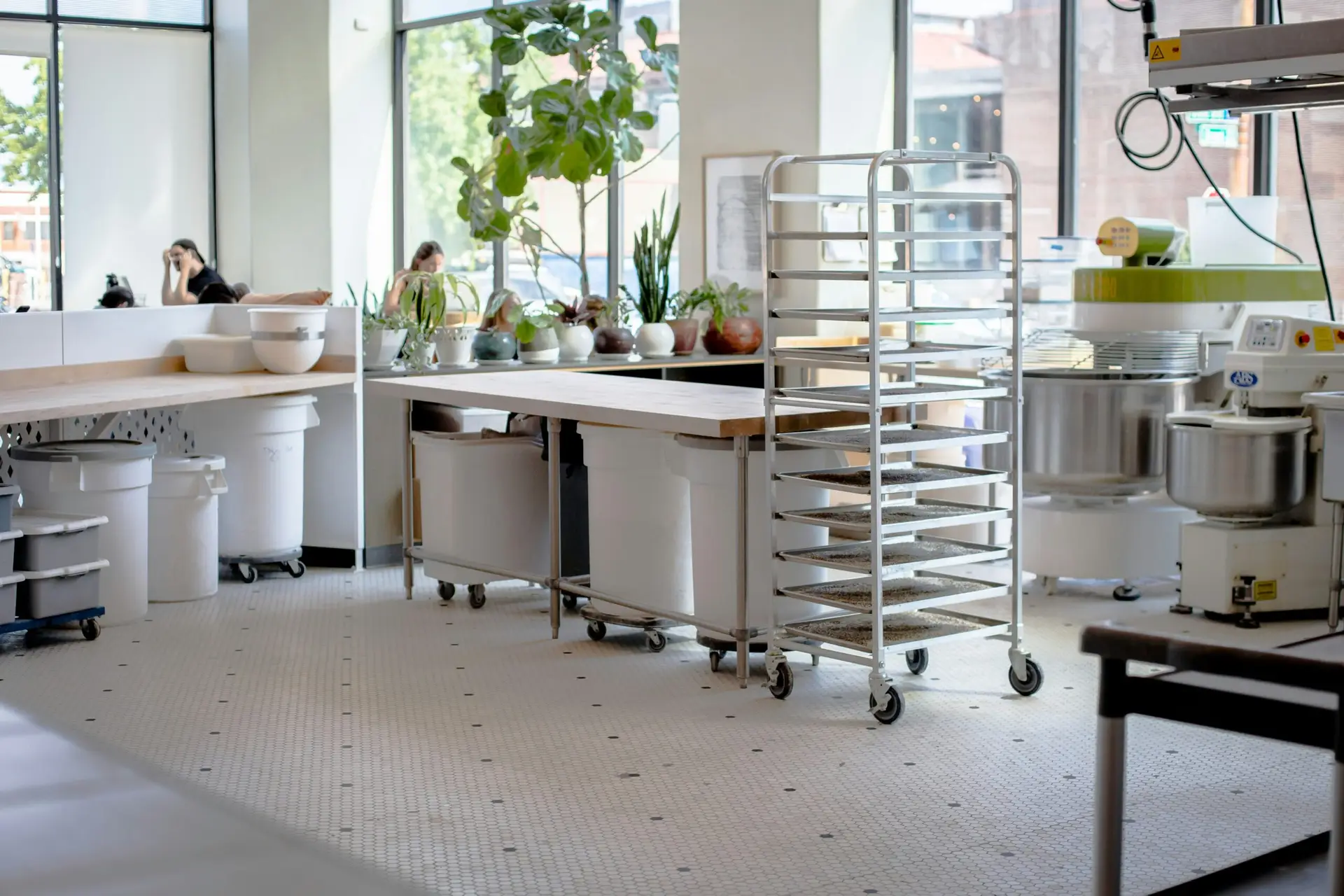
Restaurant kitchens operate in fast-paced conditions where cleanliness directly impacts food safety and customer trust. Grease accumulation, bacteria growth, and cross-contamination risks are common challenges in high-volume food preparation areas — and they don't wait for a quiet period to cause problems.
Consistent restaurant kitchen cleaning helps businesses:
- Reduce food safety risks and prevent contamination
- Maintain compliance with Canadian health regulations
- Improve employee safety and reduce slip hazards
- Extend the lifespan of kitchen equipment
- Improve customer confidence and online reviews
- Reduce odours and long-term grease buildup
"Customers may never see the inside of your kitchen — but the quality of your sanitation practices affects every part of the dining experience."
Canadian food businesses are expected to follow food safety guidelines established by local and federal authorities. The Canadian Food Inspection Agency (CFIA) provides food safety guidance and sanitation information for commercial food operations throughout Canada.
What Makes a Cleaning Product Effective for Commercial Kitchens?
Not all cleaning products are designed for commercial food service environments. Restaurant kitchens require specialized solutions capable of handling grease, bacteria, and high-volume daily usage that residential products simply can't match.
The best products for restaurant kitchen cleaning should deliver:
- Strong grease removal — Commercial kitchens generate significant grease around fryers, stovetops, cooking lines, and ventilation systems. Heavy-duty degreasers are necessary to remove buildup safely and efficiently.
- Food-safe application — Products used near food preparation surfaces must be approved for commercial kitchen use and safe when applied correctly to any food-contact area.
- Disinfecting capabilities — Cleaning products should eliminate harmful bacteria and pathogens after surfaces have been properly cleaned and rinsed.
- Surface protection — Commercial kitchens contain stainless steel, tile, rubber flooring, and specialty cooking equipment. Products should clean without corroding or damaging these surfaces.
- Ease of use — Simple application procedures improve consistency among staff and make routine sanitation easier to maintain during busy service hours.
Best Degreasers for Restaurant Kitchen Cleaning
Grease management is one of the most difficult parts of maintaining a commercial kitchen. Standard household products are rarely strong enough for professional food service environments — grease accumulates at a rate and volume that requires commercial-grade solutions applied consistently.
Commercial degreasers are specifically formulated for restaurant kitchen cleaning and can help remove oil buildup, cooking residue, carbon deposits, grease accumulation, and burnt food particles from surfaces and equipment.
Heavy-Duty Degreasers
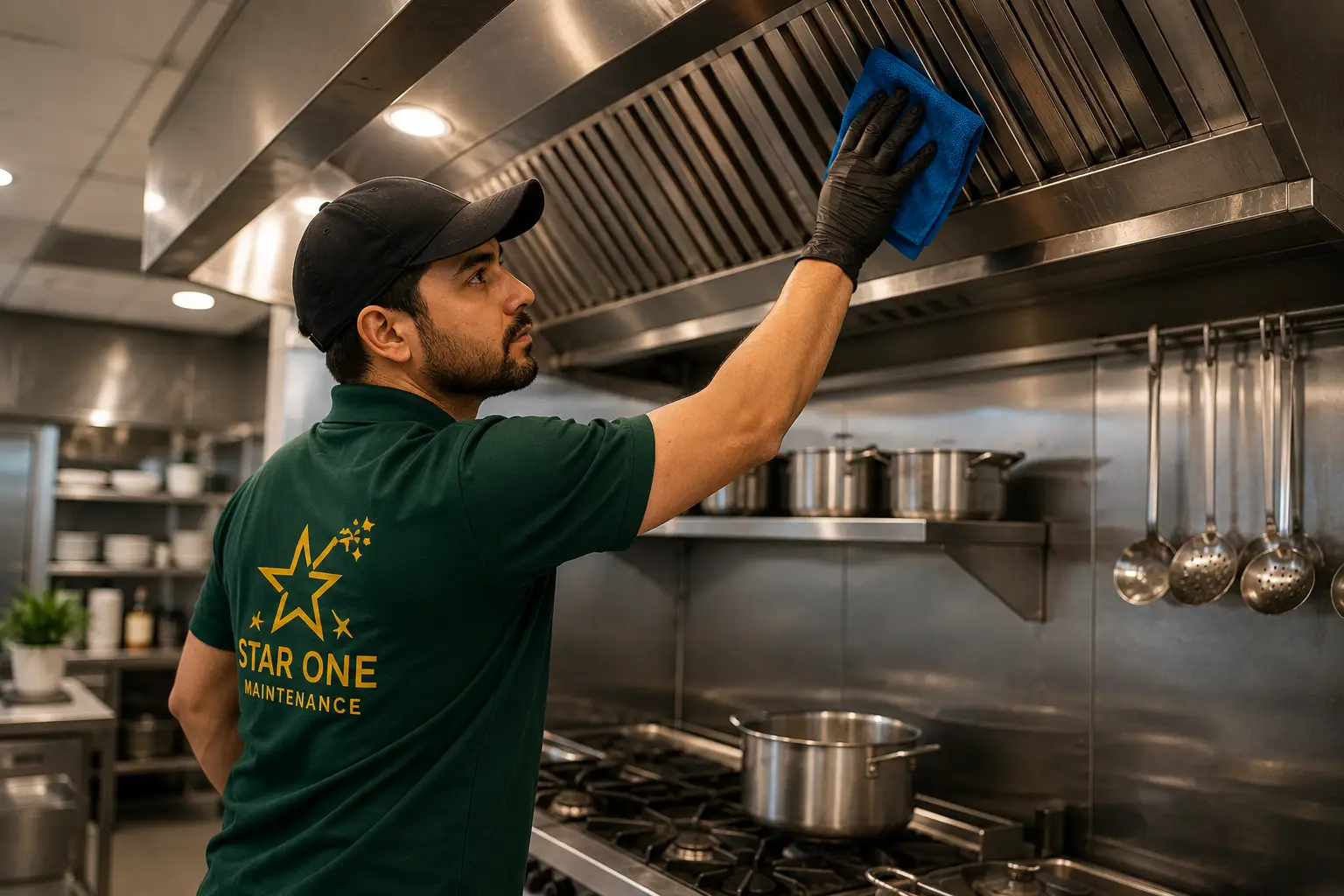
Heavy-duty degreasers are the workhorse of commercial restaurant kitchen cleaning. They're designed to break down the thick, layered grease that accumulates during daily food production — the kind that nightly surface wiping alone won't reach.
Where Heavy-Duty Degreasers Are Used
- Fryers and deep fat fryer exteriors
- Grills and flat-top cooking surfaces
- Exhaust hoods and ventilation systems
- Kitchen floors and floor drains
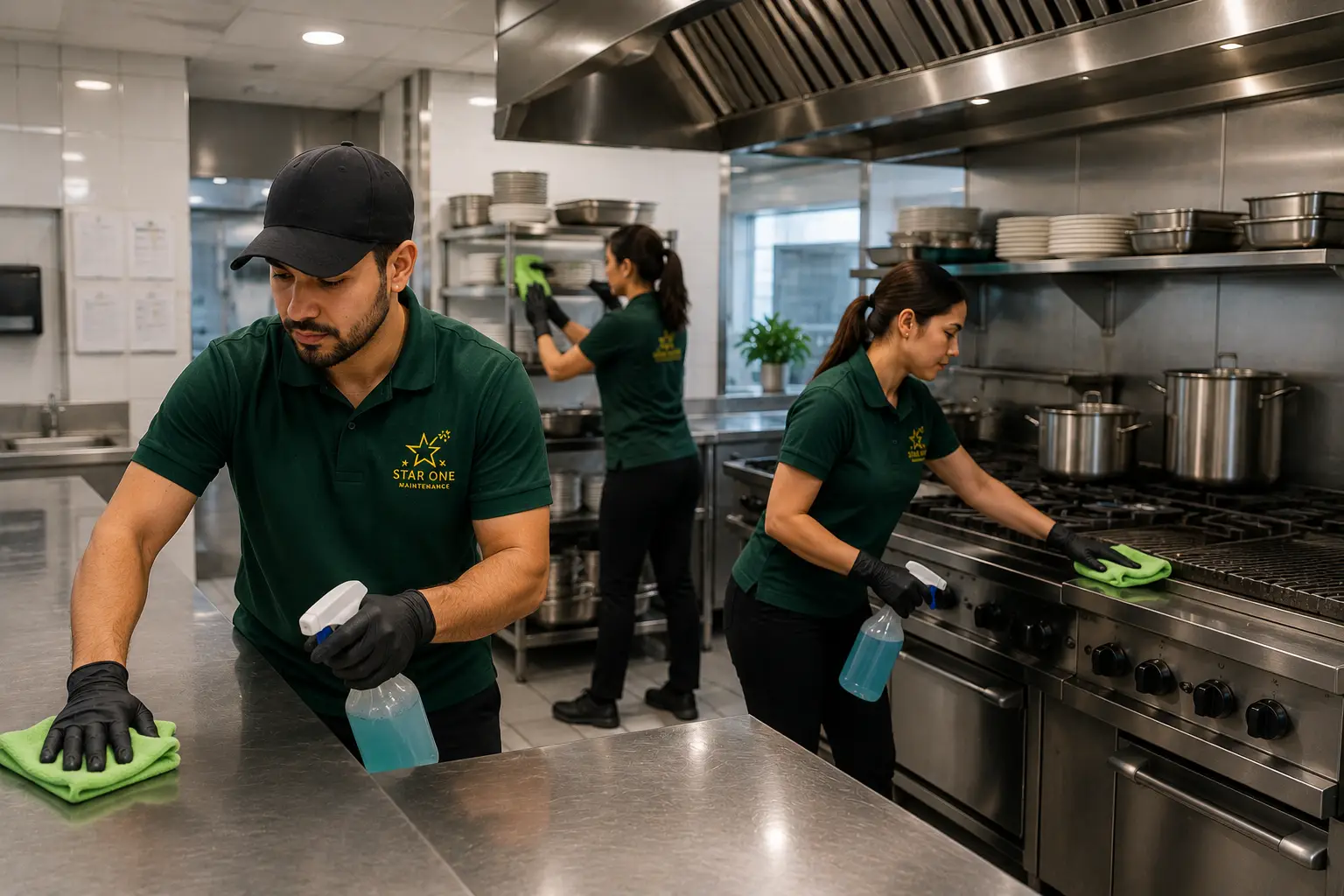
- Stainless steel equipment and cooking ranges
- Behind and underneath cooking equipment
Many restaurants use heavy-duty degreasers nightly to reduce long-term buildup and prevent the difficult, time-consuming cleaning issues that develop when grease is left to accumulate over days or weeks.
Eco-Friendly Degreasers
More Canadian restaurants are adopting environmentally responsible cleaning products to reduce chemical exposure and environmental impact without sacrificing cleaning performance. Eco-friendly degreasers are becoming increasingly popular for restaurant kitchen cleaning because they reduce harsh chemical odours, improve indoor air quality for kitchen staff, support sustainability initiatives, and lower environmental impact without compromising grease-cutting effectiveness.
The UL ECOLOGO Certification Program helps businesses identify environmentally responsible commercial cleaning products that meet independent third-party environmental performance standards.
Best Sanitizers for Restaurant Kitchen Cleaning
Cleaning removes dirt and grease, but sanitizing reduces bacteria and pathogens on surfaces after cleaning is complete. Sanitizers are a critical and non-negotiable part of effective restaurant kitchen cleaning — food-contact surfaces require a higher standard of hygiene than general cleaning alone can achieve.
Quaternary Ammonium
Known as "quat sanitizers," these are widely used across food service environments for prep counters, cutting stations, tables, and food-contact surfaces. Effective, easy to use, and surface-safe.
Chlorine-Based
Bleach-based products are a common solution for restaurant kitchen cleaning, particularly in dishwashing and sanitizing systems. Proper dilution ratios are critical to ensure safe application and avoid surface damage.
Hydrogen Peroxide
Increasingly used in modern commercial kitchens for strong disinfecting capabilities with fewer harsh chemical fumes — preferred in kitchens focused on safer indoor air quality for kitchen staff.
Best Floor Cleaners for Restaurant Kitchens
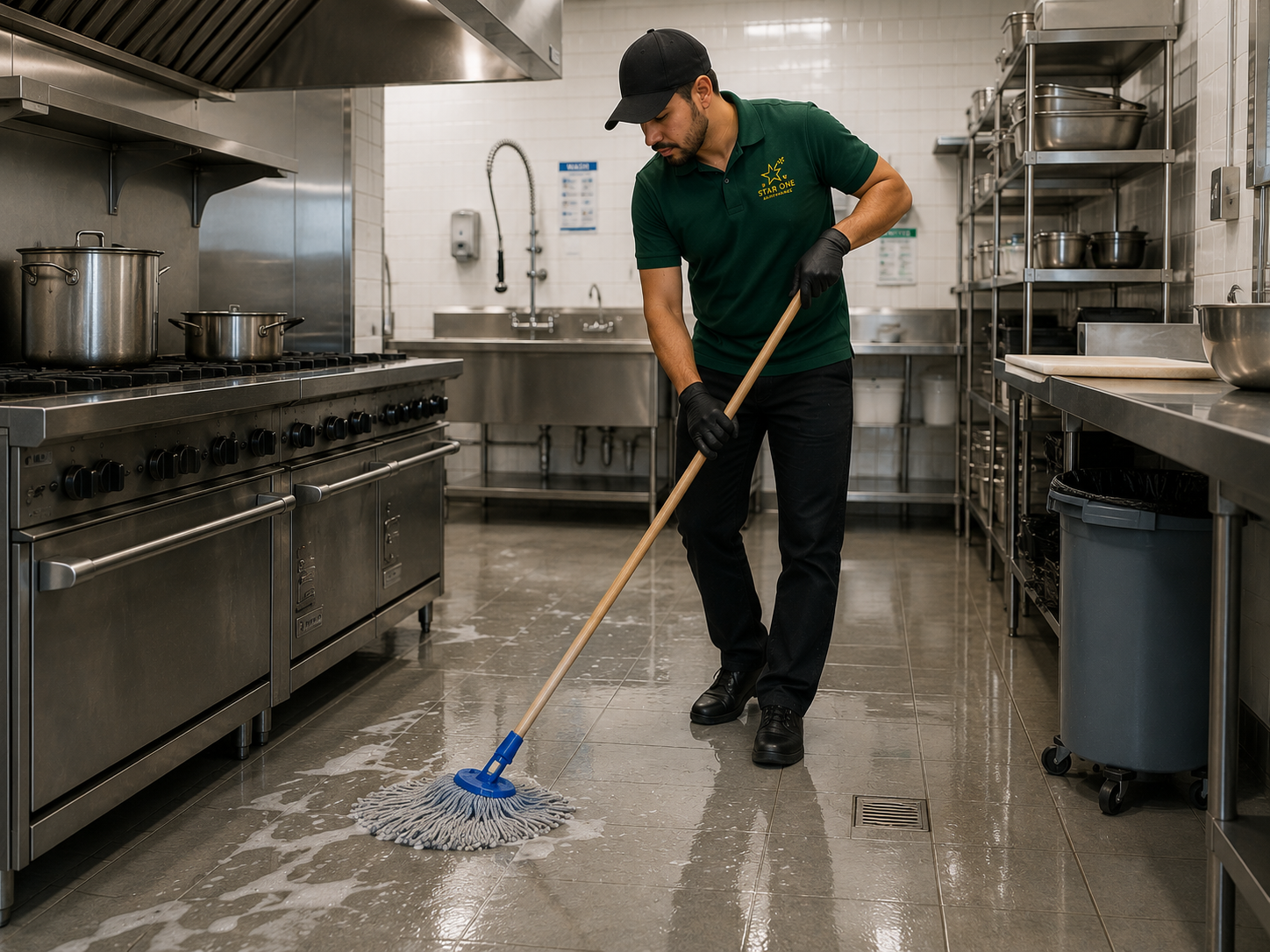
Restaurant floors experience heavy foot traffic, grease splatter, spills, and moisture throughout every service period. Slippery floors quickly become serious safety hazards for kitchen staff — and floor cleanliness is one of the first things health inspectors examine during a visit.
Degreasing Floor Cleaners
Commercial floor degreasers are specifically designed to remove oily residue from kitchen flooring systems. They're commonly used in cooking areas, prep stations, walk-in coolers, dishwashing areas, and storage rooms where grease and moisture combine to create persistent contamination and slip risk.
Non-Slip Floor Cleaning Products
Some commercial cleaners are designed specifically to maintain floor grip after cleaning — particularly important in high-volume restaurant environments where kitchen staff are moving quickly throughout the shift. Routine floor-focused restaurant kitchen cleaning helps reduce slip hazards while improving overall sanitation standards across all kitchen zones.
Best Products for Stainless Steel Surfaces
Stainless steel is one of the most common materials found in commercial kitchens because it's durable and relatively easy to sanitize — but improper cleaning products can leave streaks, residue, or corrosion that damage surfaces over time and create contamination risks.
- Remove fingerprints and surface smearing
- Reduce grease buildup on prep surfaces and equipment
- Maintain the shine that signals a clean, professional kitchen
- Protect surfaces from corrosion and chemical damage
- Improve overall kitchen appearance for staff and management
Many restaurants use dedicated stainless steel polishers after degreasing to maintain a consistently clean and professional kitchen environment — and to protect the significant investment that commercial kitchen equipment represents.
Best Cleaning Products for Restaurant Kitchen Equipment
Commercial kitchen equipment requires specialized maintenance to remain sanitary, functional, and compliant with health standards. General-purpose cleaners often don't have the formulation to handle what commercial equipment accumulates during a full service week.
Grill and Oven Cleaners
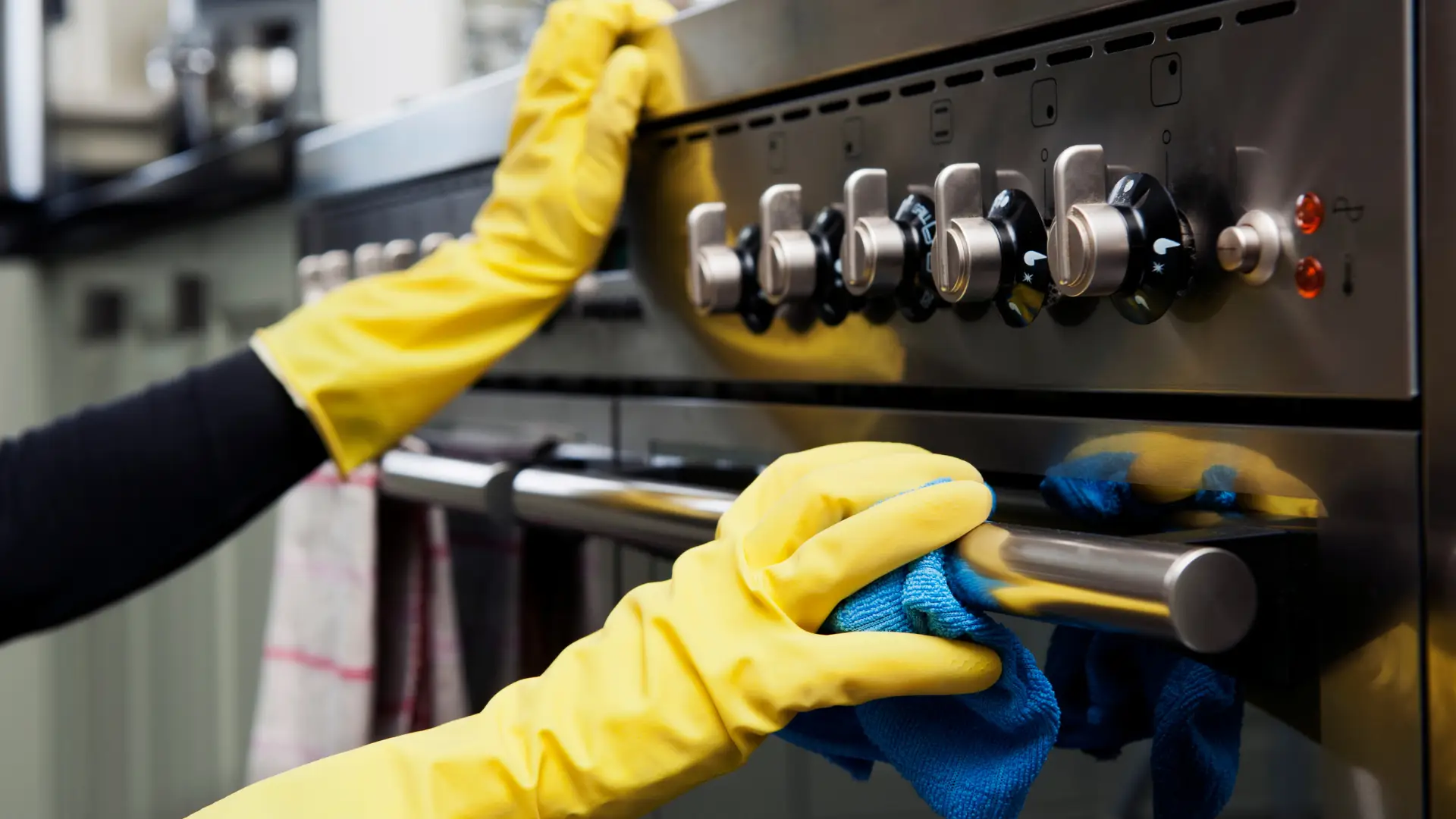
Commercial ovens and grills accumulate carbon deposits and baked-on grease that standard cleaners cannot easily remove. Specialized products for restaurant kitchen cleaning are designed to break down these materials safely and efficiently — without damaging the cooking surfaces or leaving chemical residue that could contaminate food.
Fryer Cleaning Solutions
Deep fryers require regular boil-outs and degreasing to maintain performance and food quality. Fryer cleaning chemicals help remove oil residue while extending equipment lifespan — a fryer that isn't cleaned properly degrades faster, produces lower-quality food, and poses a fire risk.
Ice Machine Cleaners
Ice machines can accumulate mineral deposits and bacteria if not cleaned according to a regular schedule. Restaurant kitchen cleaning should include sanitization of ice machines at the frequency recommended by the manufacturer and your local health authority.
The Public Health Agency of Canada emphasizes the importance of maintaining sanitary food-contact surfaces in public food environments — including ice-making equipment that many operators overlook.
Disposable Cleaning Supplies Restaurants Should Use
In addition to chemical cleaning products, the right disposable tools play a major role in effective sanitation. Using the correct tool for the right area is just as important as using the right chemical.
Disposable Gloves
Essential for any staff handling chemicals or cleaning food-contact surfaces. Change between areas to prevent cross-contamination.
Colour-Coded Cloths
Prevent cross-contamination between prep areas, washrooms, and dining spaces. A standard system used by professional cleaning teams.
Heavy-Duty Scrub Pads
For removing baked-on residue from cooking equipment, tiles, and grout lines that cloths and mops can't reach effectively.
Microfiber Cloths
More effective than cotton cloths at trapping bacteria and debris. Reusable, washable, and more economical over time for routine surface wiping.
Many restaurants use colour-coded systems across all cleaning tools — not just cloths — to ensure that what touches the washroom floor never touches a food prep counter. It's a simple system that significantly reduces cross-contamination risk across the entire operation.
Common Restaurant Kitchen Cleaning Mistakes
Even with quality products, improper cleaning practices reduce effectiveness and create risks. These are the most common mistakes professional cleaning teams see in commercial kitchens across the Lower Mainland — and how to avoid them.
Using Household Cleaning Products
Residential cleaners are typically not designed for commercial grease buildup or food service sanitation requirements. Commercial-grade restaurant kitchen cleaning products are far more effective for high-volume kitchens and meet the regulatory standards that residential products don't address.
Skipping Sanitization After Cleaning
Cleaning alone is not enough. Sanitizing food-contact surfaces is a separate and critical step in maintaining proper hygiene — cleaning removes debris, sanitizing eliminates the bacteria that cleaning doesn't reach.
Improper Chemical Dilution
Using too much or too little cleaning solution reduces effectiveness or damages surfaces. Always follow manufacturer dilution instructions — over-concentration doesn't mean better results and can damage equipment or leave dangerous residue.
Neglecting Hard-to-Reach Areas
Grease and debris accumulate behind cooking equipment, under prep stations, inside ventilation systems, and in floor drains. These areas are rarely addressed during rushed daily cleaning — and they're exactly where professional deep restaurant kitchen cleaning makes the biggest difference.
Eco-Friendly Restaurant Kitchen Cleaning Trends in Canada
Sustainability has become increasingly important in the Canadian restaurant industry. Many businesses are now choosing environmentally responsible cleaning products as part of their operations — driven by both regulatory direction and customer expectation.
Eco-conscious restaurant kitchen cleaning solutions often include:
- Biodegradable chemicals that break down without leaving persistent environmental residue
- Refillable cleaning systems that reduce single-use plastic packaging
- Low-toxicity formulas that improve indoor air quality for kitchen staff
- Green-certified products verified by independent certification bodies
- Concentrated formulas that reduce transport emissions and storage space
Environmentally responsible cleaning practices also appeal to modern consumers who prioritize sustainability when choosing where to dine — and restaurants that communicate their commitment to responsible operations build stronger brand loyalty as a result.